
The office pen economy, and the one pen that never comes back
Every office runs a small, undeclared economy in pens. There's a cup of them by the printer in Đà Nẵng, and the population inside it obeys strict rules: the free ones from hotels and conferences multiply on their own, and any pen that actually writes well disappears within a week. Nobody steals it, exactly. It just migrates into someone's notebook and never migrates back.
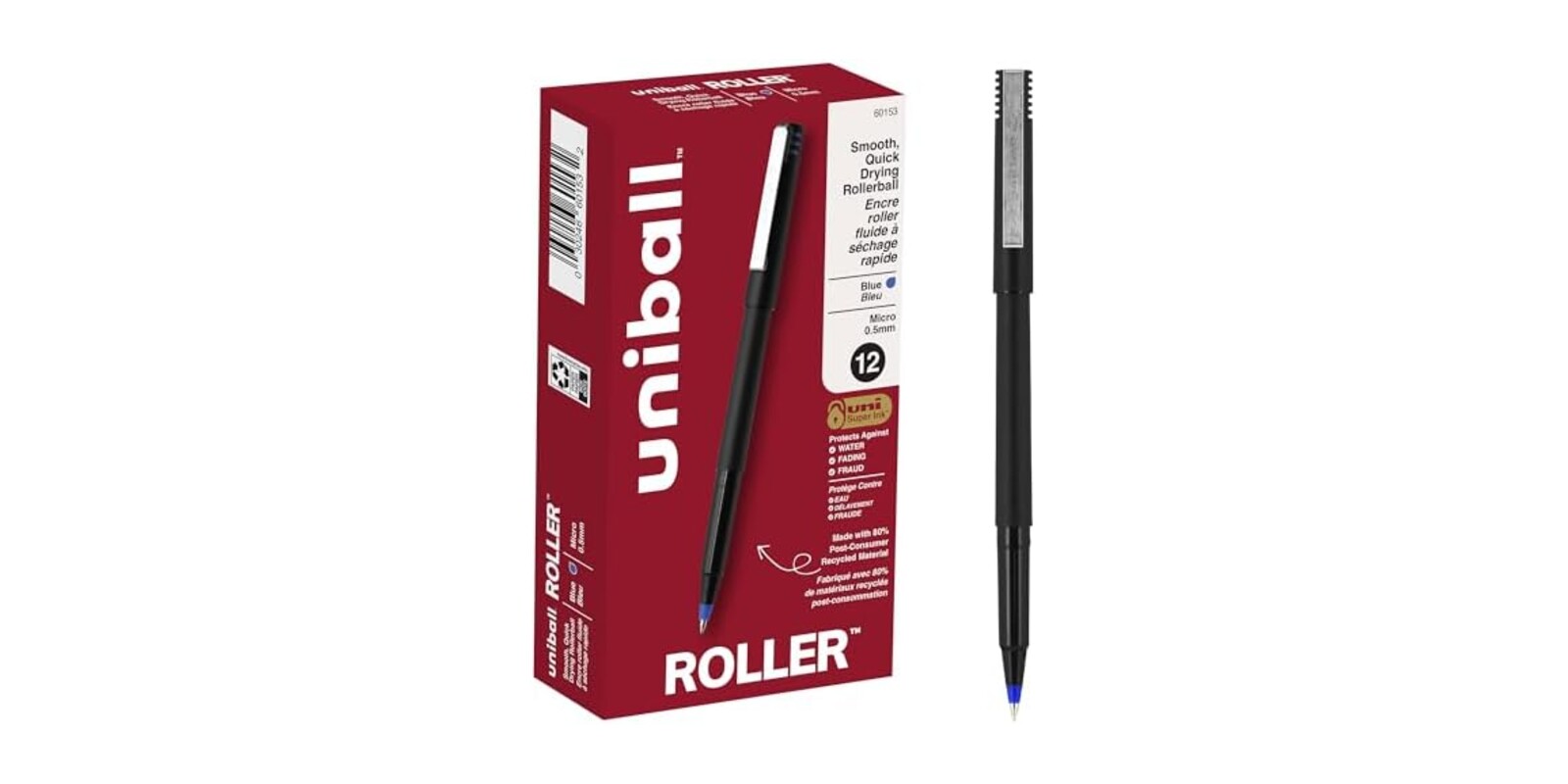
For years the pen that vanished fastest was a blue uni-ball with a fine tip. I only learned what it was called when I finally flipped one over and ordered a box: the uni-ball Roller Micro, 0.5mm, twelve to a pack. The product page promises it will "elevate your everyday writing experience," which is the kind of sentence I have personally written about less deserving products. The pen survives the copy. It's just a very good pen.
Who Actually Needs This
Not everyone writes by hand anymore, and if your entire output is Slack and spreadsheets, a box of twelve pens is eleven more than you need. It earns its place for:
- 📓 Notebook people. Anyone who still plans the week on paper and wants a line that's thin, dark, and dry before their hand drags across it.
- ✍️ Whoever signs things. Contracts, customs forms, the courier's clipboard. Liquid ink looks deliberate in a way a ballpoint doesn't.
- 📦 Offices. Buying pens by the dozen is how you opt out of the pen economy entirely. There is always another one in the drawer.
- 🎨 Small, precise writing. The 0.5mm tip is made for margins, annotations, and people whose handwriting shrinks under deadline.
What It Gets You
Ink that behaves
This is a rollerball, so it lays down liquid ink like a fountain pen without the ceremony or the risk to your shirt. The line is a proper saturated blue, it doesn't skip, and it dries fast enough that left-handed writers on the team stopped smudging their own notes. The ink is also acid-free and archival grade, which matters exactly once in a while, when the thing you signed needs to still be legible years from now.
A body with no nonsense
The barrel is slim, light, and made mostly from recycled material. There's no rubber grip, no clip that doubles as a bottle opener, no branding exercise. The cap posts properly and stays on in a pocket, which one long-term reviewer confirmed after carrying the same pen daily for a year. It's the kind of design that got finished decades ago and then sensibly left alone.
Twelve of them
The dozen is the point. One good pen is a possession you guard. Twelve good pens is infrastructure. You can hand one to a client mid-meeting and not track its return, which, in a small way, is a nicer gesture than most branded merchandise we've ever shipped.
💡 Tien's Note
If the office cup empties faster than seems physically possible, that's not theft, that's product-market fit. Keep the box in a drawer and decant two at a time. Also: these want a slightly lighter grip than a ballpoint. Let the ink do the work and the tip lasts noticeably longer.
The Honest Version
It sits at 4.8 stars across more than two thousand ratings, which is about as close to unanimous as a stationery review section gets. The praise is what you'd expect: smooth, consistent, no leaks, no fading, and a surprising number of people declaring it the only pen they'll use, unprompted and unpaid.
The caveats are small because the product is small. The barrel is narrow and completely smooth, so if you like a cushioned grip or have big hands, a long writing session will remind you there's no padding here; one otherwise happy reviewer docked a star for exactly that. Liquid ink is also less forgiving on cheap, thin paper, where it can feather a little. And this is not the pen for people who chew, click, or generally fight their stationery. It has a cap. Caps get lost.
The whole box costs about what one office lunch runs, spread across twelve pens and most of a year. As business expenses go, it's the least I have ever agonized over, and the one nobody has ever questioned.
The cup by the printer still empties. I've stopped investigating. Some economies you don't fix, you just fund.
As Amazon Associates we earn from qualifying purchases. This comes at no extra cost to you.